
Is Gynecomastia Surgery Permanent? Understanding the Risk of Regrowth
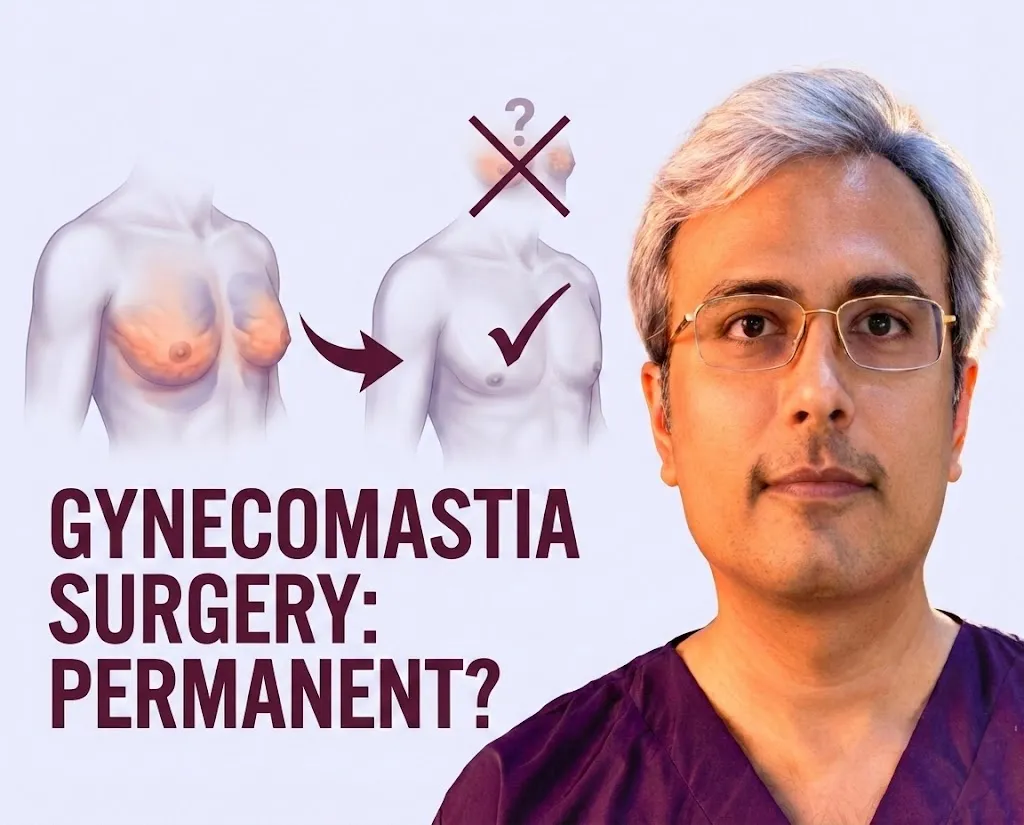
One of the biggest fears men have before committing to gynecomastia surgery is simple: “What if it comes back?”
It is a valid concern. You are investing significant time, money, and emotional energy into achieving a flat, masculine chest. The thought of going through surgery only to see the chest enlarge again is a nightmare scenario.
The good news is that for the vast majority of patients, gynecomastia surgery is a permanent, one-time solution. Once the glandular tissue is removed, it cannot grow back on its own. However, the human body is complex, and certain lifestyle factors or medical conditions can trigger a recurrence.
In this guide, we will explain exactly how the surgery works to prevent regrowth, and what rare circumstances might cause your results to change over time.
The Science of Fat vs. Gland Removal
To understand why the results are considered permanent, you need to understand what is actually being removed during the procedure.
Fat Cells Don’t Regenerate (But They Can Expand)
During liposuction, we physically remove fat cells from the chest. Once a fat cell is removed from the body, it does not grow back. Adults have a fixed number of fat cells. However, the remaining fat cells (the ones left behind to maintain smooth contours) can still expand if you gain a significant amount of weight.
Glandular Tissue Removal: Partial vs. Total
The breast gland is the firm, rubbery tissue responsible for true gynecomastia.
- Total Mastectomy: Removing 100% of the breast tissue ensures zero chance of regrowth, but it often leads to a “crater deformity” or inverted nipple.
- Sub-Total Excision: Most surgeons perform this technique. We remove about 95-98% of the gland but leave a tiny, thin layer behind.
Why Surgeons Leave a ‘Button’ of Tissue
Leaving a small “button” of tissue (2-3mm thick) directly under the nipple-areola complex is crucial. It acts as a cushion, preventing the nipple from adhering to the chest muscle and looking sunken. While leaving tissue behind technically leaves a possibility for regrowth, in practice, this remnant is usually too small to respond to hormones unless extreme triggers are present.
Curious about how surgeons decide how much to remove? Read our guide on surgical technique differences.
Primary Causes of Regrowth
While the surgery handles the existing problem, it cannot change your genetics or future choices. If regrowth happens, it is usually due to one of these three factors:
1. Significant Weight Gain (Pseudogynecomastia Return)
If you gain 15-20 kg (30-40 lbs) after surgery, your chest will get bigger. This isn’t usually the gland growing back; it is the remaining fat cells expanding. This is called pseudogynecomastia. The good news is that if you lose the weight, the chest often flattens out again.
2. Anabolic Steroid Use
This is the #1 cause of true recurrence in bodybuilders. Anabolic steroids convert to estrogen in the body (aromatization). Even a tiny “button” of leftover gland tissue can reactively explode in size if flooded with synthetic hormones. If you plan to use performance-enhancing drugs, you must discuss this with your surgeon honestly.
3. Hormonal Imbalances
Rarely, an underlying medical condition—like a pituitary tumor, hyperthyroidism, or adrenal issue—can cause a massive hormonal spike that stimulates breast tissue growth.
Medication-Induced Recurrence
Sometimes, the culprit is in your medicine cabinet. Certain prescription drugs have “gynecomastia” listed as a known side effect. If you start these after your surgery, there is a small risk of stimulating the remaining tissue.
- Anti-Anxiety Meds and Antidepressants: Drugs like Valium or tricyclic antidepressants can alter hormone levels.
- Blood Pressure Medications: Calcium channel blockers and spironolactone are known offenders.
- Finasteride and Hair Loss Drugs: These work by blocking DHT (a potent androgen), which can tip the ratio in favor of estrogen, potentially causing sensitivity or regrowth in the chest.
Concerned about what caused your condition in the first place? Review the common causes of gynecomastia to identify your triggers.
Adolescent Regrowth Risks
Timing is everything. Operating on a teenager whose body is still developing carries a slightly higher risk of recurrence compared to operating on an adult.
Operating Too Early
If a 14-year-old undergoes surgery while he is still in the middle of a puberty hormone storm, his body is still actively trying to grow breast tissue. The leftover “button” of gland is much more likely to reactivate.
Stabilizing Hormones Before Surgery
For this reason, most surgeons prefer to wait until puberty has ended (usually around age 17-18) and breast size has been stable for at least 12 months.
Revision Rates in Teenagers
While still low, the revision rate for recurrence in patients under 18 is higher than in adults. However, for teens suffering from severe bullying or depression, the benefit of early surgery often outweighs this small risk.
Unsure if you or your son is ready? Check our guide on pubertal vs adult timing.
Ensuring Longevity of Results
You want your investment to last a lifetime. Here is how to protect your results:
- Maintain a Stable Weight: Avoid “yo-yo dieting.” Stick to a healthy lifestyle that keeps your weight within a 5-10% range.
- Watch Your Lifestyle: excessive alcohol consumption and marijuana use are linked to estrogen spikes. Moderation is key.
- Regular Follow-ups: If you notice any new lump or tenderness, see your surgeon immediately. Early intervention is easier than a full revision surgery.
Conclusion
So, is gynecomastia surgery permanent? Yes. For the vast majority of men, the flat chest they achieve in the operating room is the one they keep for the rest of their lives. The gland is gone, and the fat is reduced. As long as you maintain a healthy lifestyle and avoid specific hormonal triggers like steroids, you can consider this a “one-and-done” procedure.
Ready to say goodbye to gynecomastia for good? Contact Dr. Vishal Purohit to schedule your consultation. We will assess your case and explain exactly how we ensure long-lasting, permanent results for our patients.
Call or WhatsApp: +91 77181 83535