
What is Gynecomastia? Understanding Causes, Symptoms, and Grades

Gynecomastia is more than just a cosmetic concern; it is a medical condition that affects nearly 40% to 65% of men worldwide. Often dismissed as “man boobs,” this condition involves the enlargement of glandular tissue in the male chest, leading to discomfort, embarrassment, and a loss of self-confidence.
If you have noticed changes in the shape of your chest that diet and exercise cannot fix, you are not alone. Understanding the root cause and severity of your condition is the first step toward reclaiming your confidence.
The Biological Definition of Gynecomastia
True gynecomastia is defined as the benign proliferation (growth) of glandular tissue in the male breast. Unlike simple weight gain, which increases fatty tissue, gynecomastia involves a firm, rubbery disc of tissue located directly beneath the nipple-areolar complex.
Benign means that it is not cancerous.
Glandular Tissue vs. Adipose (Fatty) Tissue
It is crucial to distinguish between the two types of tissue that can enlarge the male chest:
- Glandular Tissue: This is firm, dense, and often tender to the touch. It does not respond to caloric deficit (dieting) or cardio exercises.
- Adipose Tissue: This is soft, squishy body fat that accumulates due to excess weight.
Note: If your chest enlargement is purely due to fat, you may have a condition called Pseudogynecomastia. To learn how to tell the difference, read our guide on Gynecomastia vs. Chest Fat: How to Tell the Difference.
The Role of Estrogen and Testosterone Imbalance
The primary driver of gynecomastia is a hormonal imbalance. Men naturally produce both testosterone (the male hormone) and estrogen (the female hormone). When the ratio shifts—either due to a drop in testosterone or a surge in estrogen—breast tissue begins to grow.
Common Triggers
- Puberty: The hormonal storm during adolescence causes temporary gynecomastia in many teenage boys.
- Medication: Certain antibiotics, anti-anxiety medications, and heart medications can disrupt hormone levels.
- Aging: As men age, testosterone levels naturally decline, leading to “senile gynecomastia.”
- Diseases: Certain medical conditions, such as liver disease, kidney disease, and hormonal imbalances, can cause gynecomastia.
The Simon Grading Scale: How Severe is It?
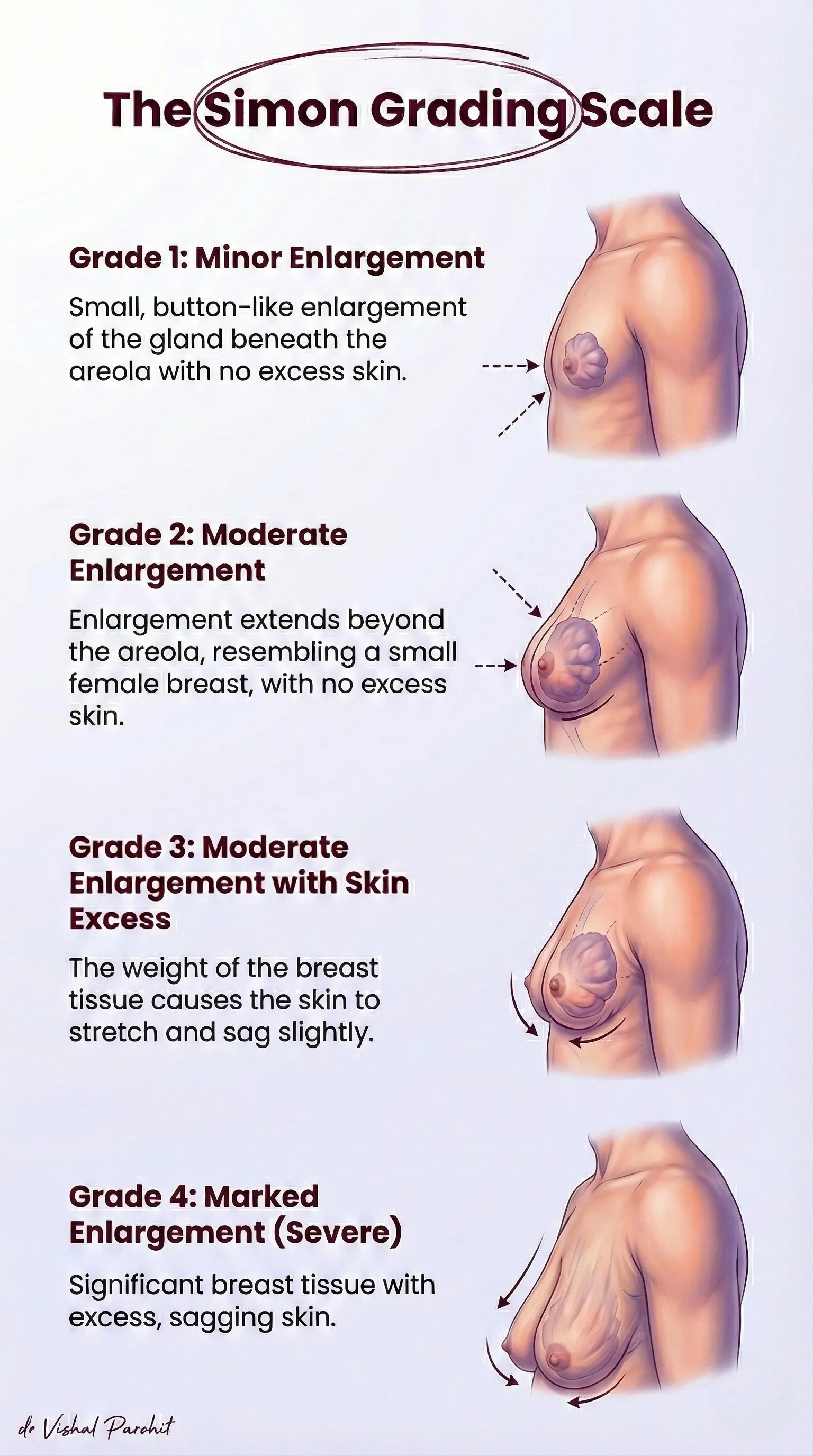
Plastic surgeons use the Simon Grading Scale to classify the severity of gynecomastia. Knowing your grade is essential because it dictates the surgical technique required and the ultimate cost of the procedure.
Grade 1: Minor Enlargement
This involves a small, button-like enlargement of the gland beneath the areola. There is no excess skin. The chest appears slightly puffy but mostly flat.
Grade 2: Moderate Enlargement
The enlargement extends beyond the areola, resembling a small female breast. Like Grade 1, there is no excess skin. This is the most common grade we treat.
Grade 3: Moderate Enlargement with Skin Excess
At this stage, the weight of the breast tissue causes the skin to stretch and sag slightly. The chest has a distinct breast-like contour.
Grade 4: Marked Enlargement (Severe)
This is the most severe form, characterized by significant breast tissue and excess, sagging skin. The appearance mimics a female breast with ptosis (drooping).
The complexity of surgery increases with the grade. For a detailed look at how severity impacts pricing, see our Complete Price Breakdown of Gynecomastia Surgery.
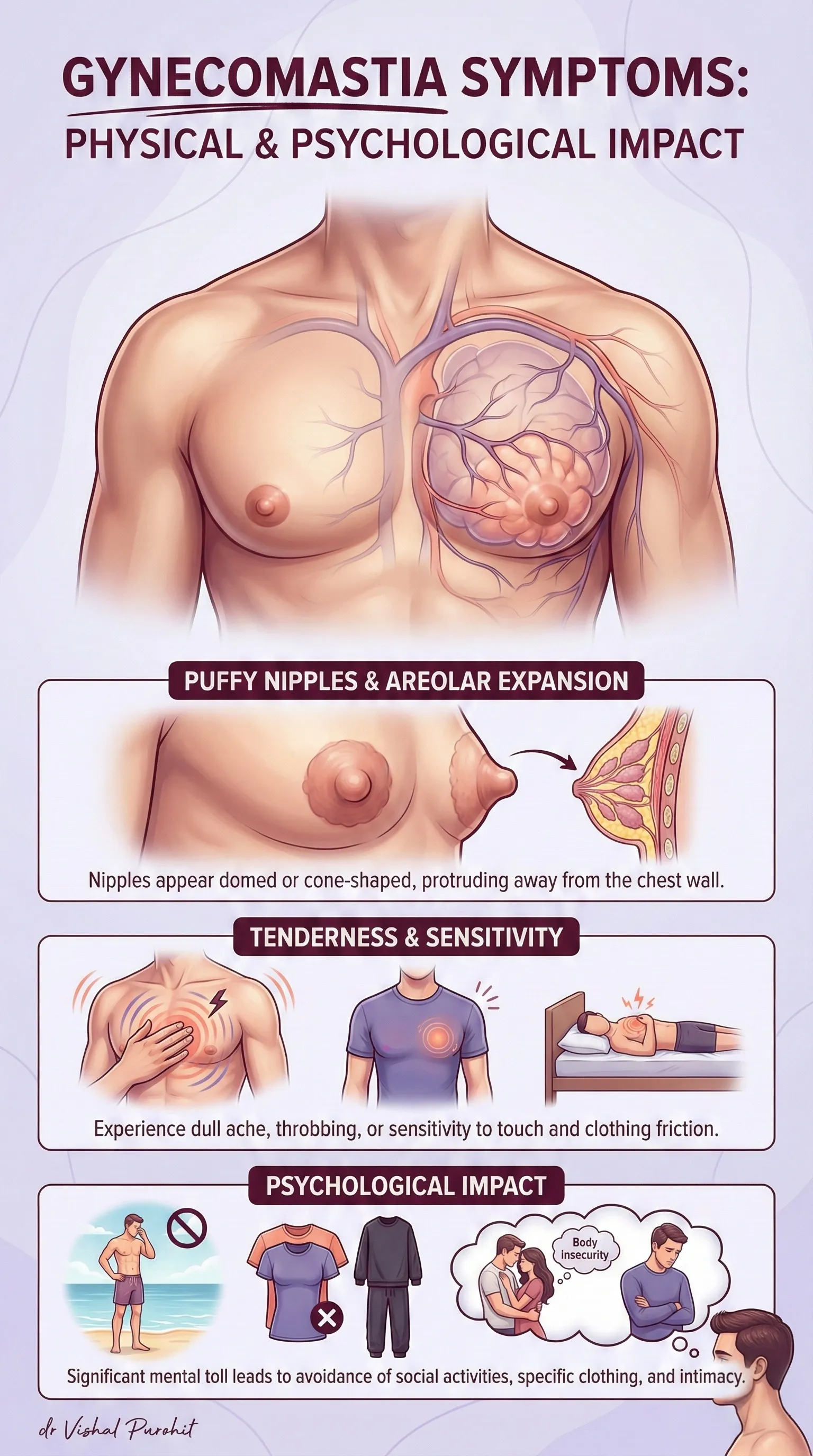
Symptoms Beyond Appearance
While the physical look of gynecomastia is the most obvious sign, many men experience physical symptoms that impact their daily quality of life.
Puffy Nipples and Areolar Expansion
The first sign is often “puffy nipples,” where the areola (the dark skin around the nipple) becomes domed or cone-shaped, protruding away from the chest wall.
Tenderness and Sensitivity
Active gynecomastia—especially during puberty or drug-induced onset—can be painful. You may feel:
- Sensitivity when the nipple rubs against clothing.
- A dull ache or throbbing sensation in the chest.
- Tenderness when lying on your stomach.
Psychological Impact
The mental toll is often heavier than the physical one. Men with gynecomastia frequently avoid:
- Swimming or going to the beach.
- Wearing fitted t-shirts or light-colored clothing.
- Intimacy due to body shame.
When to See a Doctor
Occasional chest fluctuations are normal, but certain signs warrant a professional medical evaluation.
Rapid Growth and Pain
If your chest size increases rapidly over a few weeks or months, or if the tenderness becomes unmanageable, you should seek medical advice immediately.
Unilateral (One-Sided) Enlargement
Gynecomastia typically affects both sides, but it can be asymmetrical. However, a hard, irregular lump on only one side should always be checked to rule out other conditions.
Rule Out Male Breast Cancer
Although rare (less than 1% of all breast cancers), male breast cancer is a possibility. Warning signs include:
- A hard, painless lump that feels fixed to the chest wall.
- Dimpling of the skin (like an orange peel).
- Nipple discharge (blood or fluid).
- Inverted nipple.
Next Steps: Diagnosis
Diagnosing gynecomastia is a straightforward process at our clinic.
- Physical Exam: We use palpation (feeling the tissue) to determine if the mass is rubbery (gland) or soft (fat).
- Medical History: We review your medications and lifestyle to identify potential triggers.
- Hormone Panel: A simple blood test can check your Testosterone, Estrogen, Prolactin, and Thyroid levels.
- Ultrasound: In some cases, an ultrasound is used to visualize the density of the tissue.
Conclusion
Gynecomastia is a treatable medical condition, not a life sentence. Whether you are dealing with puffy nipples or significant chest enlargement, modern surgical techniques can restore a masculine, flat chest contour with minimal downtime.
Ready to take the next step? Stop hiding and start living. Contact Dr. Vishal Purohit today to schedule your confidential consultation.
Call or WhatsApp us at: 7718183535