
The Gynecomastia Surgery Recovery Timeline: Day-by-Day Guide
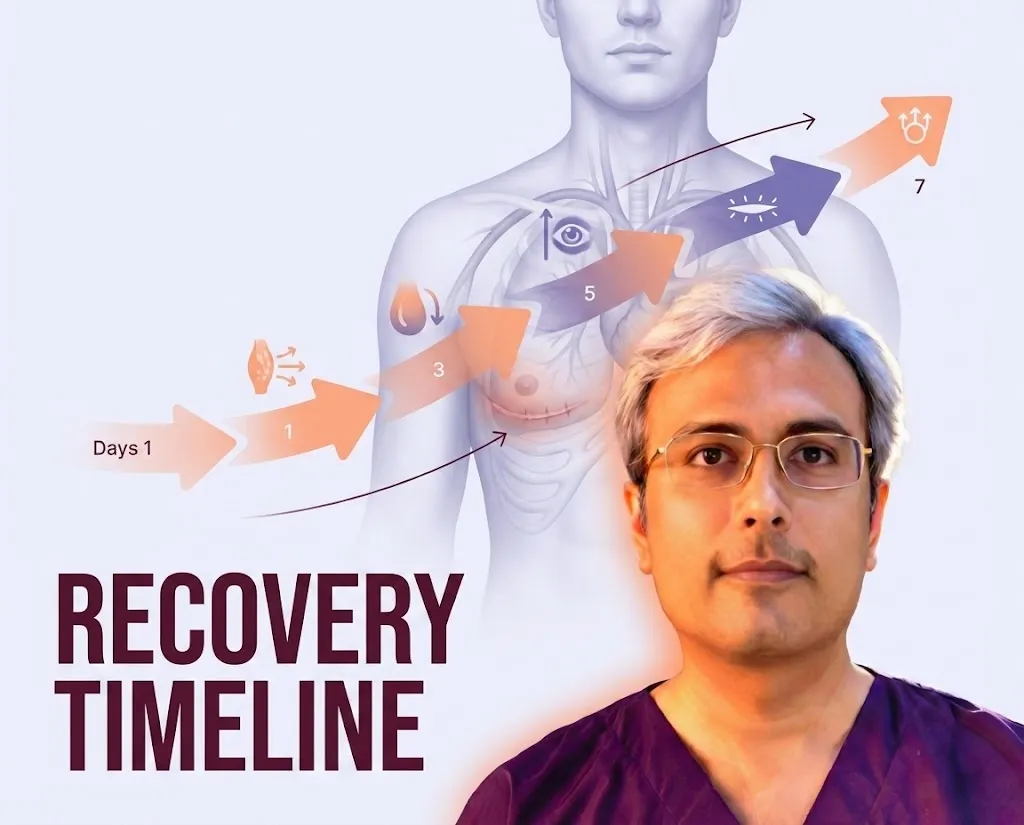
Booking your gynecomastia surgery is exciting, but as the date approaches, the excitement often turns to anxiety about the recovery. How much will it hurt? When can I shower? How long do I have to wear the vest?
Understanding the recovery process is just as important as the surgery itself. In fact, your adherence to post-operative care instructions can make the difference between a good result and a great result. While every patient heals at their own pace, there is a general timeline that most men follow.
This guide will walk you through the journey from the moment you wake up from anesthesia to the day you reveal your final, sculpted chest.
Immediate Post-Op (Days 1-3): The “Hunker Down” Phase
The first 72 hours are crucial for preventing complications. Your body has just undergone trauma, and its primary job is to clot and heal.
Managing Pain and Soreness
Believe it or not, most patients describe the feeling not as sharp pain, but as intense soreness, similar to the feeling after a brutal chest workout.
- Pain Medication: You will likely be prescribed painkillers for the first 2-3 days. Take them as directed before the pain becomes severe.
- Ice Packs: Avoid placing ice directly on the chest, as numbness might prevent you from feeling frostbite. Follow your surgeon’s advice on cold therapy.
Dealing with Drains
Depending on the extent of your liposuction and gland excision, your surgeon may place small tubes (drains) to prevent fluid buildup.
- If you have drains, you will need to empty the bulbs and record the fluid amount daily.
- They are typically annoying but not painful, and are usually removed within 3-5 days.
The Importance of the Compression Vest
You will wake up in a tight surgical garment. Do not take this off. The compression vest is your new best friend. It serves three vital purposes:
- Reduces Swelling: It physically pushes excess fluid out of the tissues.
- Shapes the Chest: It helps the skin adhere to the muscle wall (retraction).
- Protects the Incisions: It acts as a buffer against accidental bumps.
Sleeping Positions
For the first few nights, you must sleep on your back, elevated at a 45-degree angle (use 2-3 pillows or a recliner).
- Do not sleep on your side: This puts pressure on the incisions.
- Do not sleep on your stomach: This is strictly prohibited.
The First Week (Days 4-7): Getting Back to Basics
By day 4, the “fog” of anesthesia has lifted, and you will start feeling restless. However, you are still in the fragile early healing phase.
Returning to Sedentary Work
If you have a desk job or work from home, you can likely return to work after 3-5 days. However, listen to your body. Fatigue is common.
- Avoid: Lifting heavy files, reaching high shelves, or carrying a laptop bag on your shoulder.
Showering and Hygiene
- Sponge Baths: Until your drains are removed or your surgeon gives the clear (usually 48-72 hours), stick to sponge baths.
- The First Shower: When allowed, let the water run gently over your back. Do not scrub the incision sites. Pat them dry gently—never rub.
Bruising and Swelling Peaks
Don’t panic if your chest looks worse on Day 5 than it did on Day 1. Swelling and bruising naturally peak around this time before starting to subside. Your chest may look puffy or uneven; this is normal fluid accumulation, not the final result.
Dietary Restrictions
To help the swelling go down faster, watch your diet:
- Low Sodium: Salt retains water. Avoid processed foods and salty snacks.
- High Protein: Essential for tissue repair.
- Hydration: Drink plenty of water to flush out toxins.
Weeks 2-4: The Intermediate Phase
This is the “itchy and numb” phase where you feel well enough to do things, but your body is still healing internally.
Removing Stitches
If non-dissolvable sutures were used, they are typically removed around day 10-14. This is a quick, painless office visit.
Reducing Compression Wear
Depending on your healing, your surgeon may allow you to switch from “24/7 wear” to “12 hours a day” (usually just at night). However, some surgeons prefer 4-6 weeks of full-time wear for maximum skin retraction.
Massage and Scar Care
Once the incisions have closed fully (scabs are gone), you may be instructed to start massaging the area.
- Why Massage? It breaks down firm scar tissue and prevents lumps (fibrosis) from forming under the nipple.
- Nerve Regeneration: You might feel “zaps” or tingling sensations. This is a good sign—it means your nerves are waking up.
Learn more about specific massage techniques and products in our guide on scar care techniques.
Months 1-6: Long-Term Healing
By the one-month mark, you will look good in a t-shirt, but “shirtless confidence” might take a little longer.
Resuming Workouts
Most men are cleared for light cardio at 3 weeks and chest resistance training at 4-6 weeks.
- Start Slow: Your chest muscles have been tight and inactive. Don’t try to hit a PR on the bench press immediately.
- Listen to the “Pull”: If you feel a sharp pull on your scars, stop.
For a detailed schedule on lifting weights safely, read our gym and exercise timeline.
Softening of Scar Tissue
The internal scar tissue can feel hard or lumpy for months. This is known as the “maturation phase.” With time and massage, these lumps will soften and flatten out completely.
Final Result Reveal
While you will see a massive difference immediately, the true final result—where all swelling is gone, skin is retracted, and scars have faded—is typically seen at 3 to 6 months.
Warning Signs During Recovery
While complications are rare, you must be vigilant. Contact your surgeon immediately if you notice:
- Hematoma: Sudden, painful swelling on just one side of the chest that looks dark purple or black. This is a collection of blood.
- Seroma: A feeling of liquid sloshing under the skin or a visible fluid-filled bulge.
- Infection: Redness spreading from the incision, heat, pus, or a fever over 101°F.
Worried about a symptom? Check our detailed breakdown of potential complications.
Conclusion
Recovering from gynecomastia surgery is a test of patience. The days of wearing the compression vest might feel long, but remember: you are trading a few weeks of discomfort for a lifetime of freedom. Trust the process, follow your surgeon’s instructions, and soon enough, the only thing you’ll be wearing on your chest is confidence.
Have questions about the recovery process? Our team is here to support you every step of the way. Contact Dr. Vishal Purohit for post-op guidance or to book your initial consultation.
Call or WhatsApp: +91 77181 83535