
Exercising After Gynecomastia Surgery: When Can I Hit the Gym?
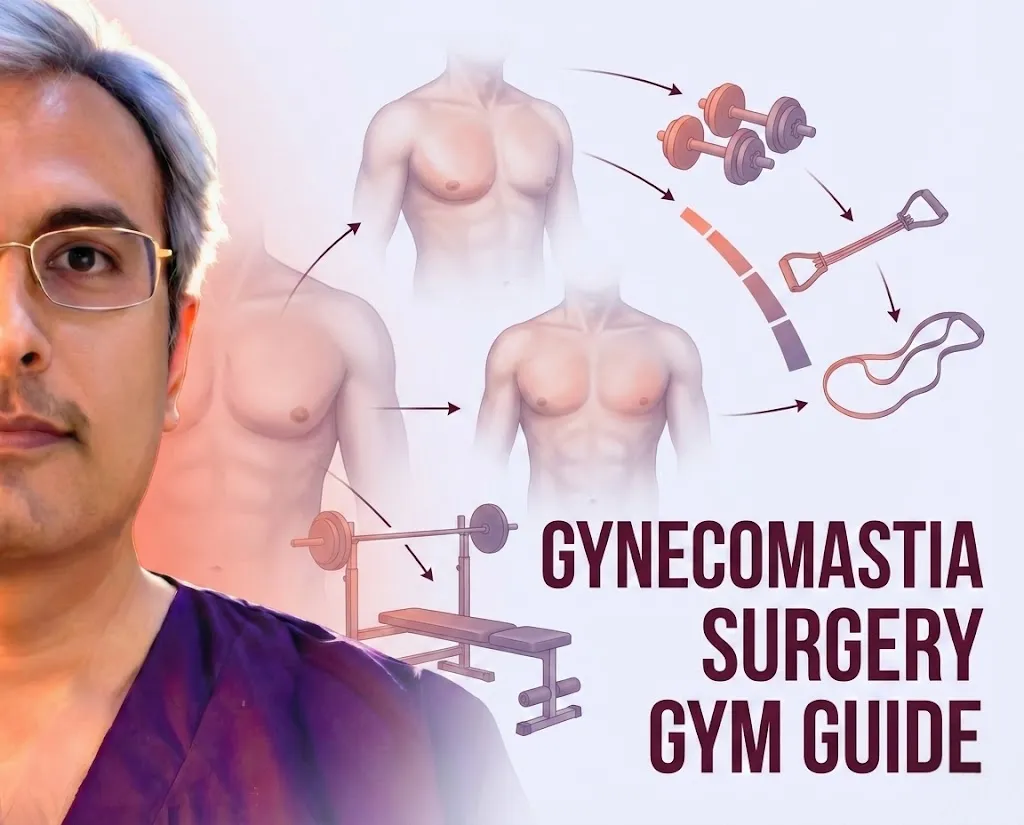
For many men, gynecomastia surgery isn’t just about removing unwanted tissue—it’s the final step in a long fitness journey. You’ve likely spent years trying to “bench press away” the chest fat, only to realize it was glandular tissue all along. Now that the gland is gone, you are probably eager to get back under the bar and finally see the muscle definition you’ve been working for.
But patience is critical. Returning to the gym too early can turn a perfect surgical result into a complication.
In this guide, we will break down the safe timeline for returning to exercise, from your first post-op walk to your first heavy bench press.
Why Rest is Critical for Muscle Repair
It is tempting to think, “I feel fine, so I can train.” However, feeling fine and being physically healed are two different things. Your body is working overtime to close blood vessels and knit skin back to muscle. Disrupting this process can lead to three major issues:
- Risk of Bleeding (Hematoma):
Raising your heart rate increases your blood pressure. If your blood pressure spikes too high in the first few days, it can pop a sealed blood vessel, causing a pool of blood (hematoma) to form under the skin. This often requires a second surgery to drain. 2. Strain on Incisions and Scars: Stretching your arms overhead or across your chest puts tension on fresh incisions. This can cause the wound to widen, leading to thicker, more visible scars. 3. Swelling and Fluid Accumulation (Seroma): Exercise increases blood flow and inflammation. If you work out while your body is still trying to drain fluid, you risk developing a seroma (a pocket of fluid) that delays healing.
Want to know exactly where you stand in the healing process? Check our full recovery timeline.
Phase 1: Walking and Mobility (Weeks 1-2)
The first two weeks are about active recovery, not training. You should not be sedentary, but you must not be strenuous.
Preventing Blood Clots with Light Walking
Starting the day after surgery, you should walk around your house for 5-10 minutes every few hours. This keeps your blood circulating and prevents Deep Vein Thrombosis (DVT), a dangerous blood clot in the legs.
Arm Mobility Limits (“T-Rex Arms”)
Think of yourself as a T-Rex: keep your elbows close to your sides.
- Do not reach high shelves.
- Do not lift anything heavier than a gallon of milk (approx. 4 kgs).
- Do not drive if you are on painkillers or have limited range of motion.
Avoid Raising Heart Rate
Keep your heart rate below 100 BPM. If you find yourself sweating or breathing heavily, you are doing too much. Sit down and rest.
Phase 2: Lower Body and Cardio (Weeks 3-4)
By week 3, most patients feel a significant boost in energy. You can start reintroducing structured exercise, but your upper body is still off-limits.
Stationary Bike and Elliptical
You can start using a stationary bike (recumbent is best) or an elliptical machine.
- Keep it steady-state: No High-Intensity Interval Training (HIIT) or sprinting yet.
- No bouncing: Avoid running on a treadmill, as the bouncing motion can agitate the chest tissue.
Leg Press and Machines
You can return to lower body strength training, but be selective.
- Safe: Leg press, leg extensions, hamstring curls, and calf raises.
- Avoid: Squats with a bar on your back (strains the chest/shoulders) or deadlifts (too much systemic pressure).
- Rule of Thumb: If you have to grip a bar tightly or brace your upper body, don’t do it.
Listening to Your Body: The ‘Throb’ Test
Pay attention to your chest. If you feel a rhythmic throbbing or increased heat in the surgical area during or after exercise, you have pushed too hard. Scale back immediately.
Phase 3: Returning to Chest Workouts (Weeks 4-6+)
This is the moment you have been waiting for. Typically, around week 4 to 6, your surgeon will clear you for upper body resistance training.
Starting Light: Pec Flys vs. Bench Press
Do not start with your pre-surgery weights. Start with 50% of your max and high reps.
- Machine Pec Flys: These are often better than free weights initially because they control your range of motion.
- Pushups: Start with wall pushups or knee pushups before attempting standard ones.
Stretching Tight Scar Tissue
You might feel a tight, pulling sensation when you extend your arms. This is internal scar tissue. It is normal, but don’t force it to snap. Gentle stretching over weeks will help elongate these fibers.
Feeling unusual tightness? Read why this happens in our article on scar tissue tightness.
When to Resume Heavy Compound Lifts
Wait until Week 6 or 8 before attempting heavy barbell bench presses, overhead presses, or deadlifts. Your internal tissues need to be fully matured to handle that level of intra-abdominal pressure.
Building the Ideal Chest
Once you are fully healed, you will notice something amazing: your muscles are finally visible.
- Targeting Upper vs. Lower Pecs: Many patients neglect their upper chest. Focus on incline movements to build the “shelf” of the pec, which creates a more masculine, armored look.
- How Surgery Reveals Your Natural Shape: Often, men are surprised to see they already have decent muscle mass; it was just hidden. The surgery acts as a “reveal,” showcasing the work you’ve already put in.
- Realistic Expectations: Remember, surgery removes the gland and fat, but it doesn’t build muscle. That part is up to you.
Conclusion
Returning to the gym after gynecomastia surgery is a marathon, not a sprint. The weeks of rest might feel frustrating, but they are a small price to pay for a complication-free recovery. By respecting the timeline and listening to your body, you ensure that when you do return to the iron, you’re building on a solid, healthy foundation.
Ready to start your transformation journey? Contact Dr. Vishal Purohit to schedule your consultation. We guide our patients not just through surgery, but through the entire recovery and fitness timeline.
Call or WhatsApp: +91 77181 83535