
Can You Get Rid of Gynecomastia Without Surgery? Diet and Exercise Myths
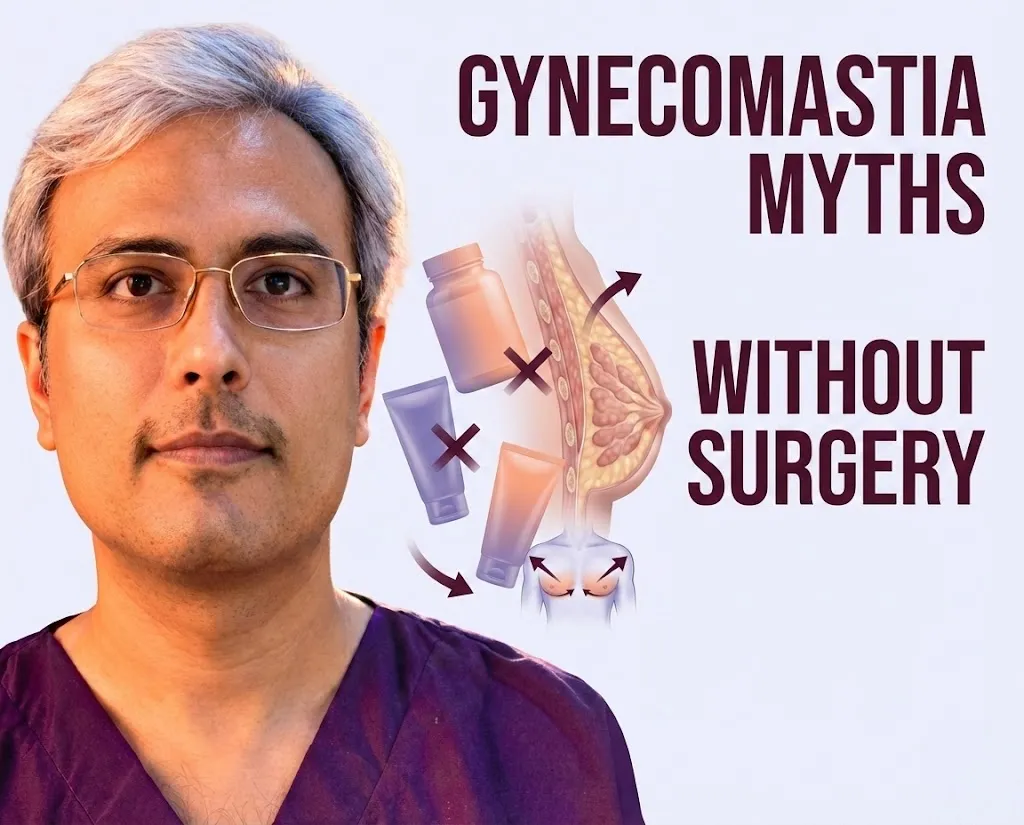
For many men, the discovery of enlarged breasts (gynecomastia) triggers an immediate and frantic search for a natural cure. It is completely understandable to want to avoid surgery. You might hit the gym harder, clean up your diet, or even browse online for “miracle” supplements that promise to melt chest fat away.
But the reality of gynecomastia is often misunderstood. While lifestyle changes can improve your overall physique, they frequently fail to flatten the chest completely. Why? Because gynecomastia is not just about weight; it is about anatomy.
In this guide, we will break down the myths surrounding natural gynecomastia treatments and explain exactly why surgery is often the only permanent solution.
The Biology of Weight Loss: Why the Gym Often Fails
To understand why bench pressing won’t necessarily cure your condition, you have to understand what is actually inside your chest.
How Fat Cells Shrink vs. How Glandular Tissue Behaves
The male breast is composed of two distinct types of tissue:
- Adipose Tissue (Fat): This is soft, squishy, and responds to caloric deficits. When you lose weight, fat cells shrink.
- Glandular Tissue: This is firm, rubbery, and fibrous. Glandular tissue does not respond to diet or exercise.
If your chest enlargement is primarily due to fat (a condition known as Pseudogynecomastia), weight loss will help significantly. However, if you have true gynecomastia, you have a solid mass of gland tissue behind the nipple. No amount of cardio will dissolve a gland; it is an organ, not a fuel source for your body.
The Myth of “Spot Reduction”
A common gym myth is that doing hundreds of push-ups will burn the fat specifically off your chest. This is biologically impossible. When you lose weight, your body decides where to burn fat from based on genetics. You cannot “target” chest fat.
Building Muscle Can Make It Look Worse
Ironically, building massive pectoral muscles underneath the gland can sometimes push the breast tissue further out, making the gynecomastia appear more prominent. While a muscular chest is a great goal, it is not a cure for glandular enlargement.
- Read More: Unsure if you have fat or gland? Read our guide on Pseudogynecomastia vs. True Gynecomastia.
Hormone Management and Supplements
Since gynecomastia is caused by an imbalance between testosterone and estrogen, many men turn to supplements to “fix” their hormones.
- Testosterone Boosters: Over-the-counter “T-boosters” are rarely potent enough to reduce established breast tissue. In some cases, increasing testosterone can actually increase estrogen levels as the body converts the excess hormone (a process called aromatization).
- Estrogen Blockers (SERMs): Medications like Tamoxifen or Raloxifene are sometimes prescribed by doctors for early-stage (acute) gynecomastia that is still painful and developing. However, once the tissue has become fibrous and established (usually after 12 months), these drugs are rarely effective.
- The Risks: Experimenting with unprescribed hormones can lead to severe mood swings, libido issues, and other endocrine disruptions. Never attempt to “balance” your hormones without a blood test and a doctor’s supervision.
Topical Creams and Non-Invasive Treatments
The internet is full of advertisements for “Gyno-Melting Balms” or tightening creams.
- Do they work? In short: No. There is no topical cream capable of penetrating the skin and dissolving a solid glandular organ. These products are generally scams targeting insecure men.
- CoolSculpting (Cryolipolysis): This non-invasive treatment freezes fat cells. While it can reduce the fatty component of the breast, it cannot remove the gland. If you have true gynecomastia, CoolSculpting often leaves the gland behind, resulting in a “puffy nipple” appearance on a flatter chest.
- Kybella Injections: Similar to CoolSculpting, these injections dissolve fat but are ineffective against fibrous glandular tissue.
Dietary Changes That Might Help
While diet won’t cure the gland, reducing inflammation and systemic estrogen can prevent the condition from getting worse.
Consider reducing:
- Alcohol: Excessive alcohol consumption can lower testosterone and increase estrogen.
- Processed Foods: High-sugar diets lead to insulin resistance, which lowers Sex Hormone Binding Globulin (SHBG), leading to more free estrogen in the blood.
- Phytoestrogens: While controversial, some men choose to limit soy products, though the link between soy and gynecomastia is not definitively proven in clinical studies.
When Surgery is the Only Option
If you have maintained a healthy weight, tried to build muscle, and still have puffy nipples or a heavy chest, you are likely dealing with fibrous glandular tissue.
This tissue is tough, white, and scar-like. It does not dissolve; it must be physically removed.
- Skin Laxity: For men who have lost a massive amount of weight (100+ lbs), the chest may sag not because of the gland, but because of loose skin. In these cases, skin excision is necessary.
- Stop the Spending Cycle: Many patients spend thousands on supplements, coaching, and creams over the years—money that could have been put toward a permanent surgical solution.
- Read More: Ready to consider the permanent fix? Check our detailed breakdown of Gynecomastia Surgery Costs.
Conclusion
It is admirable to try to solve gynecomastia naturally first. A healthy diet and exercise routine are vital for your long-term health. However, if you are dealing with true glandular gynecomastia, do not blame yourself when the weight doesn’t come off your chest. It’s not a failure of effort; it’s a matter of anatomy.
If you are tired of guessing and want a definitive diagnosis and solution, we can help.
Call Dr. Vishal Purohit at Kalpana Aesthetics today at 7718183535 to schedule your consultation and reclaim your confidence.